Tuesday, 13 September 2011

John O'Groats to Land's End: Pennine Way 1

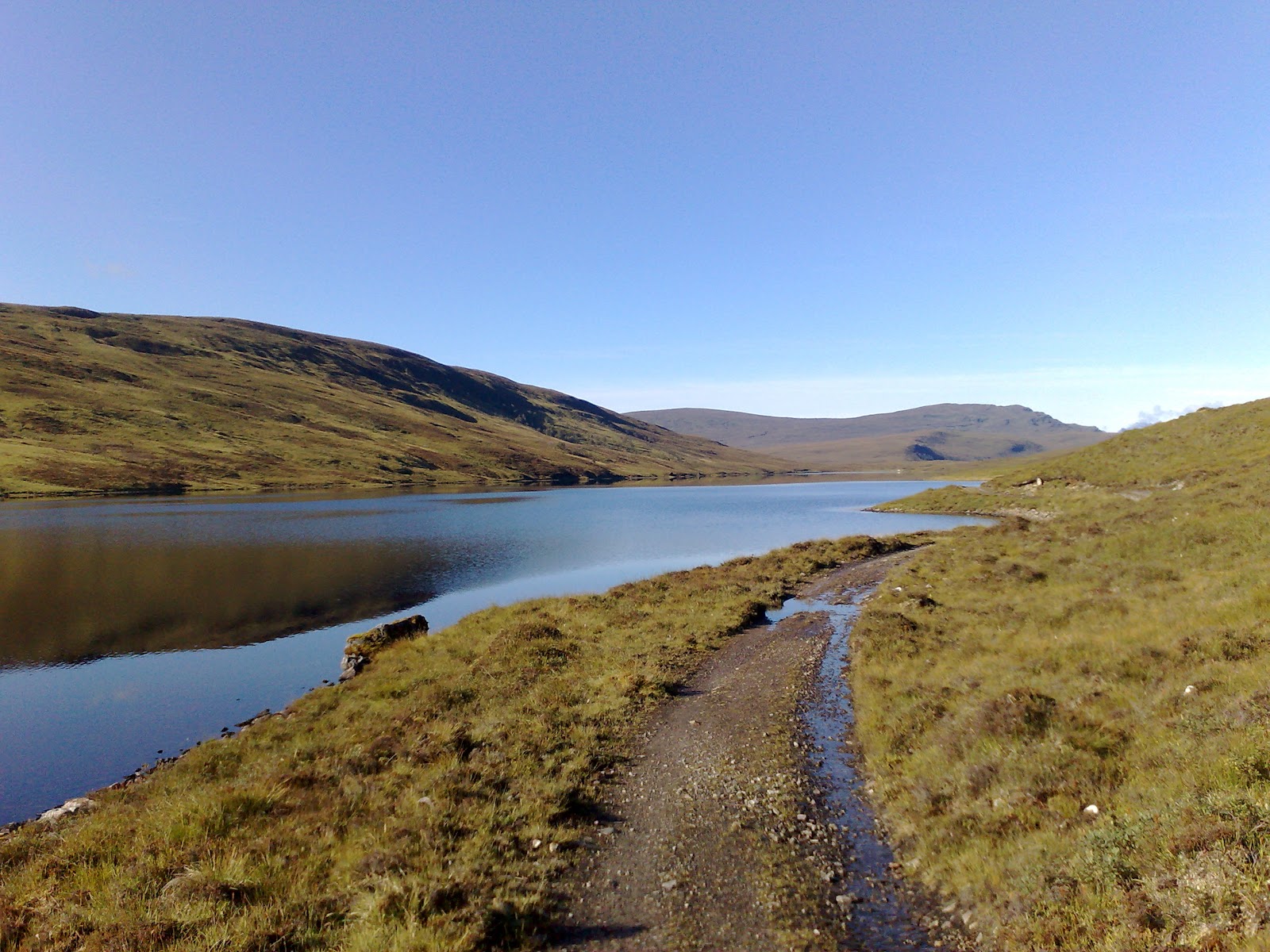
I had hoped for things to improve on the Pennine Way. I had hiked it 6 years ago and had really enjoyed it then. But so far unfortunately it has not been very enjoyable. First of all it has turned out to be every bit as muddy as the Scotland - so I am back to wet feet and foot problems. Second the waymarking is really bad. As there are usually no trees around you cannot put blazes or signs on trees. The usual way to signposting is putting signs on stiles and fences. But if there is no such a thing around things are getting difficult. Very often it is impossible to see a trail on the ground as everything is boggy. Sheep and cattle  make matters even worse as they mess up every sign of a trail, run down posts by using them for scratching against and generally turn the whole terrain into one gigantic mud pool. As the country is big and wide and open you cannot really get very lost, but still navigation takes up more time than I like.

Camping in this sort of terrain is also very problematic. Not only is it difficult to find dry ground, but because of high winds you want to find some shelter. Usually I just look for a forest, but this is diffcult in the UK. As I have mentioned before almost all the UK has been deforested already back in the Stone Ages. Nowadays only 5% of the UK is covered with forest as opposed to 30% in Germany and France. And the little forest that there is is usually ugly huge pine plantations. But at least those give good wind shelter! So on my first day on the Pennine Way I was planning on camping in one of those plantations. But to my big surprise I could not see any signs of a forest when I came closer to the area! I am not the greatest navigator on earth but I could not be that wrong in reading the map. Finally I realised what had happened: The whole forest had been completely - and I mean 100% - been clear cut. I was shocked! In Germany forest is very much valued and German forest law actually prohibits clear cuts. Of course even in Germany forest is economically used, but it is also regarded as a recreational area and therefore protected against clear cutting. I had not expected that clear cutting would be allowed in any Western highly populated country like the UK. Beside being an ugly scar in the landscape the negative effects of clear cutting like soil erosion are too well known now. But still here in the UK, that is scarcely forested to begin with it is still a common practice. Forest is just thought of as a commodity and is not given any protection as a recreational area. And I would see those ugly clear cuts again and again...

But this was not the end of my streak of bad luck: The weather has never been too good on this trip. In four weeks of hiking from mid-August to  mid-September I have only been able to hike in a T-shirt for a couple of hours. Usually it is way too cold and windy for light clothes. Also it has rained almost every single day. Rain here has been very different though from the more continental German climate. In the UK you usually only get a drizzle - but it drizzles about every other hour. The usual weather pattern has been on and off rain during the day with occasional minutes of sunshine in between. At least you can dry out in between the showers. But two days ago things took a turn to the worse when the wind increased dramatically. With such a strong wind even a little drizzle hurts like needles and of course it chills your body temperature. I was hiking along Hadrian's Wall at that point - of course against the wind and totally exposed. I really started to worry about where to camp as I got wetter and colder by the minute and not even the tiniest bit of shelter in sight. I ended up camping next to a parking lot amongst at least some trees - and close to public toilets that could serve as an emergency shelter if things got really worse. The tent held up surprisingly well in these conditions and I usually put in ear plugs then - so at least I don't have to listen to the wind and be constantly afraid that a broken off tree branch will fall onto me and kill me. But at 4 am in the morning even the ear plugs could not drown out the wind any more and I realised that the night was over - and that I did not want to camp in this weather for another night. With the help of my GPS I planned a short cut hike to the next place with a youth hostel - mostly road walking and using rail trails. The Pennine Way itself is usually very exposed and I was not going to suffer through that. But even with this new route not being very much exposed and often sheltered by trees and rail embankments the wind was horrible. It was so strong that a couple of times I was nearly blown over and could hardly walk against it. I have very rarely been in wind like this before, but at least I made it to Alston and its fantastic little youth hostel where I am now having a rest day waiting for the wind to calm down.

John O'Groats to Land's End: The Scottish Borders

After leaving West Linton and my fabulous CS host David I had 4 days to make it over to the Pennine Way and eventually leave Scotland for England. This short stretch shows how different hiking in the UK can be depending on whether you are on an established and waymarked trail or going cross-country.

St. Cuthbert's Way
The first day was partly cross-country again and as usual this ended up in a disaster. The cross-country section was only about 2 km but it took me 3 hours. Everything that could go wrong went wrong and I will give you a more detailed description to show what to avoid doing: First the trail was going exactly where it should go according to my sketch map AND GPS - great! But then - when the cross-country section started a nice track continued even with sign-posts saying it would go to my destination! So why go cross-country if there is a nice trail? I followed the nice sign-posted trail for about half an hour only to realise then that the direction of it was nowhere near to where it should go. And of course there was no waymarking now either. And of course I did not have a detailed map - a fact that I have come to regret hundreds of times on this trail before. So I just could turn back and get off the nice trail. When I was about 800 meters from where the cross-country section should be according to my GPS I decided to do a short-cut and just bushwhack over to it. Another huge mistake!!! I started out on what looked like a narrow trail on the edge of a plantation but it soon turned out to be a water ditch. And before I could think twice I was in the the middle of a grassy swamp between blow-down trees with wet feet. Well, I could manage another 600 meters of that, couldn't I? These 600 meters took me 45 minutes jumping from one grass island to the next one only to end up before a stream with knee deep bog around it. After wading through that bog I spent the next 45 minutes climbing up a steep hill through waist-high ferns scaring away the sheep who were wondering about this crazy hiker screaming German curses at herself. When I finally thought I would be where I was supposed to be it turned out that I was supposed to be 100 meters higher - so much for me being capable of reading a map. A last scramble through sheep shit and bog brought me eventually to a forest road - after 3 hours. So much for going cross-country in the UK.


But things did improve the next days as I was on established trails again. First on the Southern Upland Trail that was so nice that I am actually considering to hike it one day. There even was a purpose-built bothy on the trail! Next day was on St. Cuthbert's Way visiting the three Scottish Border Abbeys Melrose, Dryburgh and Jedburgh. The abbeys are all ruins so I did not bother paying 5,50 £ to visit them. The most remarkable incident for me was seeing a three-legged dog on that trail. As its owner assured me it is getting along very well on its three legs and gets spoilt by all the tourists and hikers who take a pity on it - it had lost its leg in a car accident 8 years ago. Now it has become a local celebrity with hikers on the St. Cuthbert's Trail as it is walked there every day and darts over to any hiker around to beg for treats. Finally a last day on Dere Street brought me to the Pennine Way. Dere Street is actually an old Roman road, although nowadays you cannot see much of it, but like all things Roman it is a big issue in the UK and has even been waymarked - with a Roman military helmet! And were Dere Street meets the Pennine Way there is a long fence - the border fence between Scotland and England.

Monday, 5 September 2011

John O'Groats to Land's End: The Central Scottish Way

A JoGLE hike links together long-distance trails - but sometimes it is sort of difficult to get from the end of one trail to the beginning of the next one. On this stage of my hike I had to get from the Southern end of the West Highland Way on the Western Side of Scotland to the Nothern End of the Pennine Way which is on the Eastern side. And in between the two is the most populated and industrialised area of whole Scotland - the region between Glasgow and Edinburgh. So manouvering through that bit of civilisation seemed to be complicated and the only sort of trail I could find was call Central Scottish Way. There is a totally outdated guidebook from 1996 by a guy called Erl Wilkie about this "trail" and my Cicerone guidebook was going the same way.

First of all the Wilkie book turned out to be completely useless, but at least the sketch maps in the Cicerone were good enough - especially since basically all of this stretch is along disused train lines and canal tow pathes. I was really dreading this section because I thought it would be ugly, noisy and camping almost impossible to find. Well, I was wrong on almost all points.


The old rail trails and especially the tow pathes turned out to be very scenic, mostly through woods and albeit always being close to civilisation most of this stretch felt very remote. Plus I could see a lot of old industrial monuments like old aequaducts and railway bridges. Of course it was not the peace and quiet of deep forests, but it was remarkably quiet despite the fact that there was usually a railway and a motorway nearby. But these old railway lines and the canals are sort of in a deep cut channel - some of it protected from the outside world by huge heaps of shale (Schiefer), another reminiscent of Scottish industrial past. On these tow pathes I felt like in a little protected world. The only other people around were cyclists and people walking their dogs.

Canal tow path
Even camping turned out to be easier than I had thought. The first day I had planned with the map to end at a place with some decent forest to hide in and camp. I found the spot with painfully hurting feet and very little daylight left. Ok, I had to climb over a fence to get into the forest, but I did not think much of it. And I also did not pay much attention to the fact that there were cow paddies all over the place and lots of muddy footprints. I was just starting to set up my tent when the first steer spotted me. I was starting to deliberate whether to move or not when all of a sudden a stampede of 20 young steers came gallopping towards me. I was nearly shitting my pants and started panicking. I grabbed all my tent stuff and stuffed it into my backpack ready to run - but it was already too late: I was surrounded by a bunch of angry young steers that seemed to bluff charge me. They came running after me at full speed and would only stop 2 meters in front of me by digging in their hoofs in an emergency break. To make matters worse I had just recently read an article of hikers getting trampled and killed by cows... I started sweating profusely and praying. Slowly I retraced my steps back through the muck to the barbed wire fence - closely followed by my young steer friends who would run towards me from all directions. And when I had finally made it back to the fence in one piece they would not let me get to the fence by crowding in front of it. How would I ever get out of this paddock again? Luckily part of this paddock had been fenced off with only one strand of barbed wire and I just jumped over it into safety - with my steer friends watching every single one of my steps. I was shaking - but I was alive. And I still had to find a campsite with hurting feet and almost no daylight. When I eventually found a halfway decent spot in the twilight I realised too late that I was about 20 meters away from an active railway line. Luckily the trains stopped running around midnight....

Canal tow path
Next morning I saw a tent set up right next to the tow path! Turned out to be a father and his son on a bike trip and they assured me that according to Scottish law you can camp everywhere on public land including tow pathes. And later on I realised that they were not only right but that there are designated mooring spots for canal boats along the tow pathes that even have drinking water and picnic tables - plus usually a nice lawn to camp on. But while I was chatting with the cyclists loads of people walking their dogs passed by. The cyclist were just cooking breakfast: porridge and coffee. Apparently one of the dogs seemed to like that, too and came running over to stick his head into the porridge pot while knocking over the coffee. I was laughing my socks off: This was a scene right out of a slapstick comedy. The dog eating the porridge while its owner desperately tried to chase it away and apologised profusely for the dogs behaviour - and then the cyclists examing the leftovers trying to decide whether they could still eat it! This day started very funny and ended up with a nice campsite in a little forest which was quite despite the fact that M8 was less than 1 km away. Well, at least this part of Scotland came as a very nice surprise....

Leaving the tow pathes and entering the country side again brought me to West Linton and a nice couchsurfing host - and a well needed rest day. And it brought a definite culinary highlight of this trip: Vegetarian haggis with turnips and potatoes! Haggis is probably something you do not want to know what it is made out of - but I will tell you anyways: It is the lungs, heart and liver of a sheep baked in its stomach. The vegetarian version consisted of oatmeal, lentils, carrots and nuts - and tasted absolutely delicious, even without the obligatory whisky. In my case this was Islay whisky, which has a very smoky taste due to the peat water used in its making. And after hiking through Scotland I know a lot about peat now. To make things perfect David, my CS host even has a very energetic dog, a mutt called Murphy who would nudge me immediately as soon as I stopped giving him back rubs. I am more and more becoming a dog fan now. Well, right now I am waiting for a dinner of salmon with Murphy at my side and life is very good again.
 

John O'Groats to Land's End: West Highland Way

Despite blisters and hurting feet I finally made it to Fort William, the Northern Terminus of the West Highland Way. I really had been counting days until I would get out of the mud and the wet socks and shoes onto the dry trails of the WHW! And it finally happened: On a sunny Saturday afternoon I finally arrived in Fort William. Of course, this being a bank holiday weekend I had been unable to find any accommodation there, but eventually this turned out to be a good thing.

Boat on the Caledonian Canal
The last bit before Fort Wiliam was a nice hike along the Caledonian Canal ending at the big lock at Neptun's staircase. And I could not believe my luck when I spotted free showers there!!!! Of course I could not pass this opportunity and even put on my last and only pair of dry socks for this occasion - and hiked into Fort William as a clean hiker! My first stop was at the local outdoor shop to buy another pair of socks... and of course do some resupply shopping. And to my big surprise there was a Lidl supermarket in Fort William - of course I ended up buying German chocolate there. But still I needed some sort of rest day soon - and everything seemed to be fully booked. On top of all that I had my one and only mail drop (new shoes and maps) in the next place on the WHW called Kinlochleven. I got a first sense of how crowded the WHW would be when I tried to make a hostel reservation in Fort William or Kinlochleven and everything was fully booked for the next couple of days! But somehow I got lucky and managed to get the last camping cabin in a hotel with campsite and this turned out to be godsent. The weather turned nasty and incredibly windy that day while I was lying snug in my cosy little 18 £ cabin with a little heater. My feet started healing and I feeling better.

Old military road on the WHW
Still the WHW was some sort of a culture shock. In the 2 week in the Highlands I had barely met anyone - and on my first half-day on the WHW I met about 70 hikers! The WHW is really incredibly popular and big business. Hostels, B&B and campsites everywhere - and literally hundreds of hikers. More than half of them did not carry any bigger backpack because they were slackpacking. There are actually several companies offering luggage service for the WHW. And the other half were carrying way too much luggage with all sort of equipment dangling from their already overloaded backpacks. And of course half of the WHW hikers were German....

Why the WHW is so popular is a mystery to me: For Scottish standards the scenery is rather mediocre. The route is a very low one that does not give spectacular views. And almost all the way a very busy and very noisy highway, the A82 is very close to the trail so that you can never escape the traffic noise. There are so many other interesting, beautiful and scenic trails in the UK or in Europe and still thousand of people want to hike the WHW. And on top of all that all these masses of people try to be as crowded as possible when it comes to camping. There are tons of free wild campsites all along the way but I have hardly seen anyone camping there. Instead all the hikers congregate in pay campsites or official free campsites that are dirty and crowded.

Well, at least I had dry feet again and made some progress - and I only spent 4 days on the WHW anyways. But if you want some advice: Don't hike the WHW - there are much better trails out there.

Monday, 29 August 2011

John O'Groats to Land's End: Northern Scotland

Me at the start of the hike

My trip started turbulent enough. I was supposed to fly on a Tuesday morning and already a week earlier German air traffic controllers had been threatening to go on strike early next week - and that could be my Tuesday. And sure enough: Monday morning I read on the internet that a strike was scheduled for Tuesday 6 am to noon. Great! That was not only threatening my flight but all my onward travel connections, too. I started biting nails and watched the internet as the employer side went to court in an attempt to prevent the strike. When I went to bed Monday night I still did not know whether I would actually be flying the next morning. But when I got up Tuesday  morning things had improved: The strike had been adverted in the very last minute due to mediation and my Ryanair flight was even early!

Cliffs near John O'Groats
Everything went according to plan: I got my prebooked train ticket fromt the ticket machine in Edinburgh train station, my train was on time and even my internet youth hostel booking had worked out. I spend the next day in Inverness sightseeing in pouring rain - at least I did not have to walk through that crap weather.

And then on August 11th I started my hike with bright sunshine at John O'Groats. Little did I  know that this was to be the last sunshine for a very long time... But to already sum it up: My hike through Northern Scotland has been the worst hiking I have done in a very long time. I guess some of it is due to mistakes I made myself with planning:

 
Peat bogs
First of all I definitely underestimated the terrain. The sketch map of my Cicerone guidebook showed mostly pathes and trail and only about 15% cross country walking. I quickly realised that the cross country walking usually turned into a trip to hell. No matter where I went, the terrain was boggy, soggy and waterlogged. I was in mud up to my ankles and looked like a pig with dirt all over me. Even worse you could not usually tell beforehand how deep the mud would be. So often I just stepped onto what looked like solid ground and took a fall covering myself with more mud because it turned out a peat bog again. On top of all that the terrain got really steep and rocky (in between the muddy bits) once I was in the Highlands. My feet have not been dry for two weeks straight and started showing it. Not even on the Florida Trail have my feet been that bad. I had blisters and raw spots from rubbing all over my feet. Sometimes I just had to stop walking early because I could not stand the pain anymore. I usually average about 35 to 40 km per day, but on this stretch I was lucky to do 25 km....

Thousands of midges on my tent
Next big problem were the midges. I had known about them but I did not expect them to be that bad end of August. They were actually even worse than all the mosquitoes in Alaska!!!! There is a big difference between mosquitoes and midges: DEET works against mosquitoes, but does not seem to have much effect on midges. Mosquitoes are also relatively big - even if you get some in your tent you just kill them and then have a good night's sleep. But midges are so small  and they are so numerous that you actually breathe them in. They get everywhere and once inside your tent they are too many to kill them all. Things got so bad that I actually started cooking inside the tent - not in the vestibule, but inside the tent - something I have never done before. Packing things in the morning was a great logistical effort because you want to minimise your exposure to the midges as much as possible. It was difficult to even get a break, because I would be eaten alive by the midges as soon as I stopped moving. Therefore also no chance of airing my feet which did make my foot problems worse.

In hindsight another big problem was that I did not bring any overview maps. I just brought the Cicerone guide book sketch maps and the GPS. Unfortunately the GPS maps for Scotland were really bad and hardly showed any trails or tracks. Sometimes even roads were lacking. And therefore I could not make up alternative routes in order to avoid the dreaded cross country sections. In the end I was just counting days: Only 4 more days in this shit, only 3 more days and so on.

Bothy
There are some very nice bothies (shelters) in Scotland which are maintained by the MBA (Mountain Bothy Assosciation). But unfortunately, due to vandalism MBA has asked all map makers and guide book authors to remove the locations of their bothies!!!! So neither my guidebook nor any map showed the location of a bothy - I would just come across them by coincidence. I have great difficulty understanding this secret policy for bothies that can be a life saver in emergencies - if you know where they are!

Scotland can be nice...
After one week it was already apparent that I could not keep my schedule. Luckily I had met another long-distance hiker who had given me the OS map for that area and by that stroke of luck I was able to work out an alternative detour route through Ullapool. I urgently needed to resupply. I had started with 9 days worth of food but being already 2 days behind schedule I was running out. By another stroke of luck I was even able to get a reservation at the youth hostel there. Right now is tourist high season and everything seems to be fully booked all the time. And so I had a bit of well needed rest in Ullapool and could let my feet heal a day. Unfortunately, I had the worst fall of my whole trip in Ullapool - I slipped in the shower and fell right on my tail bone which is still hurting now 10 days later and makes it awkard to sit. But from Ullapool onward I started counting the days until I would reach Fort William, the West Highland Way and REAL trail again.

But things would get worse before they got better and that brings me to the last problem: the weather. The weather has not been very good (3 days of sun in 15 days) but not very bad either. It is drizzling most of the days but there are not too many torrential downpours. But it is much colder than I expected. One morning I woke up and found ice on my tent. And this was August 25th and the altitude only 300 meters....

To sum it up: Scotland is a place where I definitely do not want to hike again in the near future. And I find it hard to understand why Scotland is such a popular hiking destination especially for Germans. Yes, the landscape is very beautiful and remote, but you pay a very high price for that. And personally for me it has not been worth it. I would rather go to Scandinavia where you have similar landscape, but easier terrain and footing - and no midges!

But things are going to improve now: I have made it to Fort William and this means the start of the West Highland Way with hundreds of fellow hikers, decent trails and a shop around every corner. And soon I will be out of Scotland and on the Pennine Way which I have hiked before and really enjoyed. Things will only improve from now on...

Thursday, 4 August 2011

John O'Groats to Land's End: Planning

The biggest challenge in planning this trip has been to comb through the vast amount of information available for the different sections of this trip and condense it all down into a comprehensive and lightweight version.

There are two guidebooks on the market that feature the whole route - and hundreds of guidebooks and mapsets that cover sections of it. One of the "thruhiker guidebooks" by Andrew McCloy turned out to be rather useless. It contains only route descriptions without any actual maps. I was already starting to get discouraged by all the confusing route descriptions when I luckily came across the Cicerone guidebook by Andy Robinson "The end to end trail". This was exactly the kind of guidebook I had been looking for: It describes the whole route in good detail and gives sketch maps for the sections that are not part of a waymarked long-distance trail. It even gives overview information on shopping opportunities and accommodation. This book has proven to be invaluable in the planning process (I will almost completely follow its route suggestions) and will definitely be the main guidebook on trail.

Another invaluable online resource turned out to be the website of the Long-Distance Walkers Association. Their searchable data base does not only show all British long-distance trails on a map but also shows where they connect with each other. There is a lot of information for each trail and you can download gpx tracks for most of them. All the info is free, but you have to be a member (13 £) to download the tracks. (I found gpx tracks for all the trails I needed for free elsewhere on the net.)

I wanted to create a gpx track for the whole route and use the track together with maps on my GPS. So next I needed GPS maps for the UK. I was even willing to spend many on that, but everybody advised against the Garmin topo maps for the UK: Too much money for bad quality. There are a lot of other GPS maps for the UK on the market, but they were all for route planning only and could not be downloaded onto the GPS - and of course they were expensive, too. The solution came with Talkytoaster.info: Here you can download openstreetmap based maps for the UK - completely free! I was a bit afraid of the downloading process that sounded rather complicated, but it all worked fine. Mind you though that these maps are ok when following an existing gpx track, but they are by far not detailed enough for route planning of hiking trips.

Now I needed good online maps to map the missing sections based on the sketch maps in the Cicerone guidebook. The solution was www.grough.co.uk. Grough turned out to be a mixed blessing: First of all it is very cheap. 2 £ buy you one month of unlimited mapping using the wonderful Ordenance Survey maps and 40 pages of print outs. The map details are fantastic - 100% like your typical OS paper map and the printing is easy and renders high quality results. But grough is not the perfect solution either: First of all you can only use these maps online - you cannot download them onto your computer or your GPS. This means that everything takes forever. Theoretically you can upload existing gps tracks and print them out on the respective maps. Unfortunately, this did not work at all. Uploading tracks that had more than about 50 trackpoints led to constant time outs and system crashes. I got very frustrated and wasted entire days with this system until I realized that it is much faster to create the track in grough itself instead of unsuccessfully trying to import it. Still this process was very time-consuming, but less frustrating. Exporting tracks on the other hand worked quite well as long there were less than about 300 waypoints per track. I also used grough.co.uk to print out maps for the connecting stretches.

So now I will use my Garmin etrex GPS with OSM maps and a gpx track for the whole route. I have print out paper maps from grough.co.uk for the connector sections and will buy guidebooks or stripmaps for the established long-distance trails locally. I will carry the Cicerone guidebook that shows the connector sections  in sketch maps.and has route descriptions and town info. And last but not least I have an info sheet with all the logistical information on store hours, cheap hostels, gas canister availibility etc. that I have compiled myself with a lot of internet research.

A lot of work has gone into this project and I do hope it will pay off.

John O'Groats to Land's End: The Route

Next on my agenda is a hike through Great Britain, 2.000 km from John O'Groats in Northeast Scotland down to Land's End in Cornwall. Although this is the most popular hike across the UK, it is not a defined trail. Every hiker chooses their own route, but most link together existing long-distance pathes - and so will I. Most hikers walk from South to North (LEJoG), but I start rather late in the season and will therefore head the opposite direction (JoGLE). I would rather be in populated Southern England when the weather turns bad and the daylight hours dwindle than in Scotland - but that means that I will have to read all the guidebooks backwards! This is the route I have planned and it can be downloaded here in wikiloc:


These are the sections and long-distance pathes used:

  • Northern Scotland: John O'Groats to Fort William: This will be the technically most difficult stretch of the whole hike - right at the start. There are no existing long-distance trails and most of it will be cross-country. And to make matters worse there is only one little shop on day 8 of this stretch of 11 days. I will have to carry a lot of food!
  • Southern Scotland: Fort William to Jedburgh: At Fort William I will encounter the first established long-distance path of this trip, the West Highland Way. I have already hiked it, but that was in December 2003 - and hiking it in winter with only 7 hours of daylight had not been the smartest idea. I did not like it very much back then, but there aren't any good alternatives and so I will hope the WHW is better in summer. At the end of the WHW near Glasgow I come close to the most populated and industrialized are of whole Scotland - the corridor between Glasgow and Edinburgh. There is no really good way of covering this stretch so I opted for the Central Scottish Way that mostly follows canals on tow pathes - at least promising fast hiking on this rather unattractive stretch. Short stints on the Southern Upland and St Cuthberth's Way then take me to Jedburgh.
  • Pennines and Cheviots: Pennine Way: I am very much looking forward to this section as it is almost completely on the Pennine Way - one of my most favourite trails that I have already hiked in 2006. The Pennine Way seems incredible remote despite the fact that it is so close to the industrial heart of Britain.
  • From the Pennine Way to Wales: This has been the most difficult section for chosing a route. You have to circumnavigate a lot of very industrialized and populated areas and I chose a route that combines a lot of little-known but waymarked trails: Gritstone Trail, South Chesire Way and Maelor Way. 
  • Wales and Bristol Channel: I will next connect with Offa's Dyke Path which follows the Welsh border. Again, I have hiked parts of Offa's Dyke before, but this almost 10 years ago before I even knew that there is such a thing as ultralight long-distance hiking! Things get nasty after the end of Offa's Dyke: I have to cross the River Severn on a huge motorway bridge and then manouver around the urban sprawl of Bristol until finally meeting the South West Coast Path.
  • Cornwall: South West Coast Path: This last stretch takes me through Rosamunde Pilcher country - and hopefully some nice coastal walking. I have hiked parts of the SWCP before - end of November! Only God knows why I had chosen that miserable month. By the time I arrive in Cornwall it will be early to mid October and I do hope that the weather will be nicer than last time in November. Although the UK hike officially finishes at the appropriately named Land's End I will continue on past Penzance to see the famous St Michaels Mount which I think is a more spectacular ending than Land's End. 
Garmin Mapsource with which I planned this route tells me that my hike will be exactly 1.989 km long - and I expect to take a bit over 2 months. I am planning on doing a lot of sightseeing along the way and I have already purchased a National Trust Pass, allowing me to vist a lot of castles and monuments for free - and I am planning on taking advantage of it.

But you might wonder why I chose Great Britain? There are various reasons and one is a financial one: I always try "to hike with the exchange rate" and right now one currency that is even more desolate than the Euro is the British Pound. Great Britain has always been a very expensive country, but the exchange rate and couchsurfing will hopefully help me to save some money.

The other reason is that I always like to hike in countries that offer something unique - like the kangoroos and outback in Australia. Great Britain's nature is very unique: The Brits have already chopped down most of their forest back in the Stone Ages creating a very unique landscape with moors and exposed mountains. You either hate this sort of landscape and call it bleak or you love it and call it unique - I belong to the latter category of hikers. And of course there are all those castles, forts, gardens and mansions along the trail that are just waiting to be visited by me for free with my National Trust Pass.

And last but not least I love the British and their rather eccentric mentality. Nowhere else you find so much moulding carpets in bathrooms, so many complicated contraptions for just switching on a shower and such a love of purple plush sofa cushions. I love the old ladies that run B&B (not that I will be able and willing to afford many of them), the dry British humour that no German will probably find funny and the huge fully cooked breakfasts.